
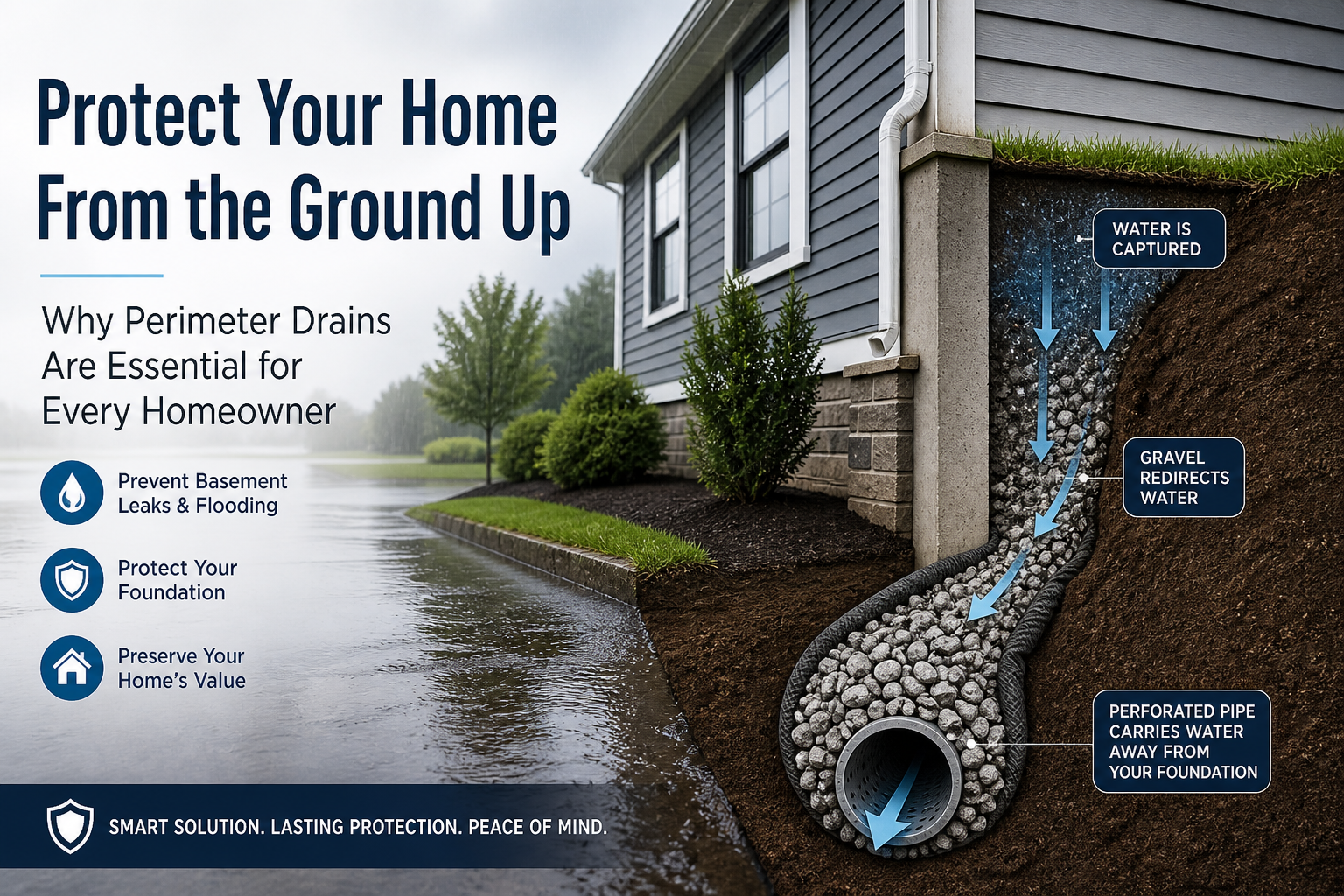
How Seasonal Rainfall in the Comox Valley Impacts Your Perimeter Drain System
If you live in the Comox Valley, you already know how dramatically the seasons can shift—long wet winters, heavy fall rains, and sudden downpours that seem to arrive out of nowhere. While most homeowners think about their roof or gutters during these times, there’s another system working quietly underground that plays an even bigger role in protecting your home: your perimeter drain.
Understanding how seasonal weather affects your drainage system can help you avoid costly surprises and keep your home dry year-round.
The Hidden Pressure Around Your Foundation
When the rainy season hits, the soil around your home becomes saturated. In areas like Courtenay, Comox, and Cumberland, where soil often holds moisture, this creates hydrostatic pressure—essentially water pushing against your foundation walls.
Your perimeter drain is designed to relieve that pressure by collecting and redirecting water. But when the system is overwhelmed, blocked, or aging, that pressure has nowhere to go.
That’s when problems begin.
Why Problems Often Show Up in Fall and Winter
Many drainage issues don’t appear during the summer—they show up when your system is under stress.
Here’s why:
Continuous rainfall saturates the ground over time
Tree roots seek out moisture and can invade drain lines
Debris and sediment build up after dry months
Older systems struggle to keep up with prolonged water exposure
By the time you notice water in your basement, the issue has often been developing for months.
New Homes Aren’t Immune
It’s a common assumption that only older homes have perimeter drain issues—but that’s not always true.
Even newer homes in the Comox Valley can experience problems due to:
Poor initial installation or grading
Shifting soil over time
Heavy construction traffic compacting drainage areas
Increasing rainfall intensity in recent years
A newer system doesn’t always mean a problem-free system.
Small Drainage Issues Can Escalate Quickly
What starts as a minor blockage or slow drainage issue can escalate during a single storm event.
For example, a partially clogged drain may handle light rain without issue. But during a heavy downpour, it can quickly become overwhelmed—leading to water backing up against your foundation or entering your basement.
That’s why proactive checks matter more than reactive repairs.
What You Can Do as a Homeowner
While perimeter drains are mostly out of sight, there are simple ways to reduce strain on your system:
Make sure downspouts discharge well away from your home
Keep gutters clear, especially before rainy seasons
Watch for low spots where water collects near your foundation
Schedule inspections if your home is older or you’ve never had one
Think of it as supporting your drainage system rather than relying on it to handle everything alone.
When to Call a Professional
If you’ve experienced repeated wet spots, unexplained dampness, or water intrusion during storms, it’s worth getting a professional assessment.
Modern inspection tools—like drain cameras—can identify issues early, often before excavation is needed. Catching problems early can mean the difference between a simple fix and a full system replacement.
Staying Ahead of the Rain
In a region like the Comox Valley, water management isn’t optional—it’s part of responsible homeownership. Your perimeter drain system is your first line of defense against the long-term effects of moisture and soil pressure.
The good news is that with the right awareness and maintenance, most serious drainage issues can be prevented before they turn into expensive repairs.
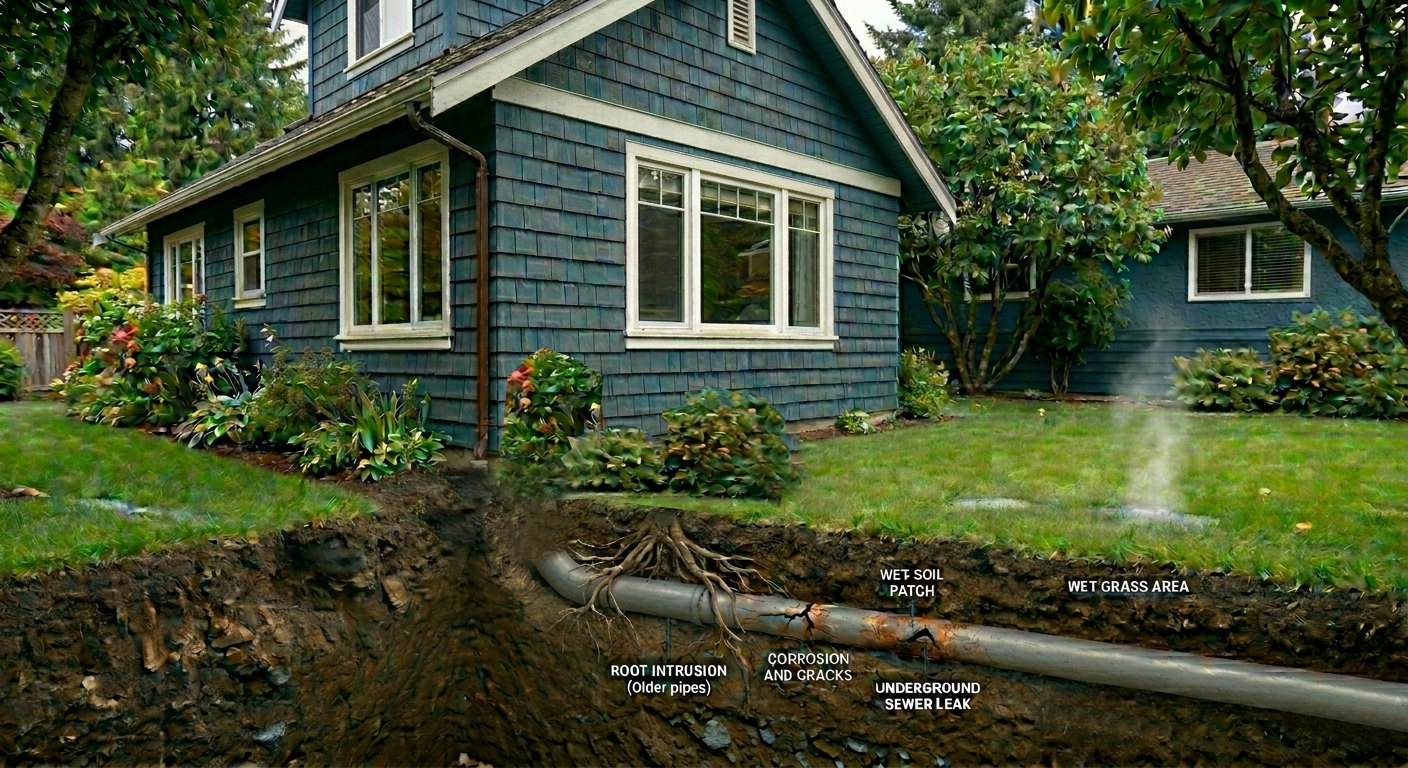
Signs You Need a Sewer Line Inspection — And How Often Your Drains Should Be Professionally Cleaned
Most homeowners don’t think about their drains or sewer lines until something goes wrong. Unfortunately, plumbing problems often build slowly over time before turning into expensive emergencies. Knowing the warning signs early — and keeping up with professional drain cleaning — can help protect your home, plumbing system, and peace of mind.
Warning Signs You May Need a Sewer Line Inspection
Your sewer line is responsible for carrying wastewater safely away from your home. When problems develop underground, the symptoms often appear inside the house first.
Multiple Slow Drains
If more than one sink, tub, or shower is draining slowly, it may point to a blockage deeper in your main sewer line rather than a simple clog.
Gurgling Sounds
Hearing bubbling or gurgling noises from toilets or drains can indicate trapped air caused by a sewer line obstruction.
Frequent Backups
A toilet or drain that repeatedly backs up — even after plunging or cleaning — is a strong sign that a professional sewer inspection may be needed.
Bad Odours
Unpleasant sewer smells inside or outside your home can indicate cracks, blockages, or sewer gas escaping from damaged pipes.
Wet Spots or Extra Green Grass
Unexpected wet patches in the yard or unusually green sections of grass may signal an underground sewer leak.
Older Plumbing Systems
Older homes in the Comox Valley may have aging pipes that are more vulnerable to root intrusion, corrosion, or collapse over time.
How Often Should Drains Be Professionally Cleaned?
Professional drain cleaning is preventative maintenance that helps avoid major plumbing issues before they happen.
Typical Recommendation
For most homes, professional drain cleaning every 1–2 years is a good preventative schedule.
Homes That May Need More Frequent Cleaning
Some homes benefit from annual drain cleaning, including:
- Older homes with mature trees nearby
- Large families with heavy plumbing use
- Homes with recurring grease buildup
- Properties that have experienced past sewer backups
Benefits of Professional Drain Cleaning
Routine cleaning can:
- Improve drainage speed
- Reduce odours
- Prevent stubborn clogs
- Help identify early sewer line problems
- Extend the life of your plumbing system
Professional equipment like camera inspections and hydro jetting can remove buildup far more effectively than store-bought drain cleaners.
Don’t Wait for a Plumbing Emergency
Many serious sewer problems begin with small warning signs homeowners overlook. A professional inspection and preventative drain cleaning can save thousands in future repairs and help keep your home protected year-round.
At Terra Nova Plumbing, the team helps homeowners throughout the Comox Valley identify plumbing issues early and keep their systems flowing properly with expert inspections, maintenance, and drain services.

Is It Time to Replace Your Poly-B Piping?
If your home was built between the late 1970s and mid-1990s, there’s a good chance it may contain Poly-B piping. Once considered an affordable and innovative plumbing solution, Poly-B (polybutylene) piping has since become known for its tendency to fail, leading many homeowners to replace it before problems occur.
What Is Poly-B Piping?
Poly-B is a flexible grey plastic pipe that was commonly installed in residential homes throughout Canada. It was popular because it was inexpensive, easy to install, and resistant to freezing. However, over time, plumbers and homeowners discovered that Poly-B pipes could become brittle and prone to cracking.
Why Is Poly-B a Concern?
The biggest issue with Poly-B piping is that it can deteriorate from the inside out. Chemicals commonly found in municipal water systems can weaken the material over time. Because the damage often occurs internally, the pipes may appear perfectly fine until a leak suddenly develops.
Common problems include:
· Unexpected pipe failures
· Water damage to walls, ceilings, and flooring
· Reduced home insurance options
· Lower property value during resale
Signs Your Home May Have Poly-B
Not sure what type of plumbing is in your home? Here are a few clues:
· Your home was built between 1978 and 1998
· Grey flexible plastic pipes are visible near your water heater or under sinks
· You have brass or plastic fittings connecting the pipes
· Home inspection reports mention Poly-B plumbing
If you’re unsure, a professional plumbing inspection can quickly identify the type of piping in your home.
Why Replace Poly-B Before It Fails?
Waiting until a pipe bursts can result in costly repairs and significant disruption to your household. Proactively replacing Poly-B piping offers several benefits:
Protect Your Home
A single leak can cause thousands of dollars in water damage. Replacing aging pipes helps reduce that risk.
Improve Insurance Eligibility
Many insurance companies either charge higher premiums or restrict coverage for homes with Poly-B plumbing. Re-piping can improve your options.
Increase Home Value
Buyers are often cautious when purchasing homes with Poly-B. Replacing the system can make your property more attractive and easier to sell.
Gain Peace of Mind
Knowing your plumbing system is built with modern, reliable materials allows you to focus on enjoying your home rather than worrying about hidden leaks.
What Does a Poly-B Replacement Involve?
A complete Poly-B replacement involves removing or bypassing the old piping and installing modern materials such as PEX. Professional plumbers carefully plan the project to minimize disruption while ensuring the new system meets current plumbing standards.
While every home is different, most homeowners find that replacing Poly-B is a worthwhile investment compared to the potential cost of emergency repairs and water damage.
Trust Terra Nova Plumbing for Poly-B Replacement
At Terra Nova Plumbing, we help homeowners identify and replace aging Poly-B piping with reliable modern plumbing systems. Our experienced team will assess your home’s plumbing, explain your options, and complete the work with care and professionalism.
If you suspect your home may have Poly-B piping, contact Terra Nova Plumbing today for an inspection and expert advice. Replacing it now could save you from a costly surprise later.
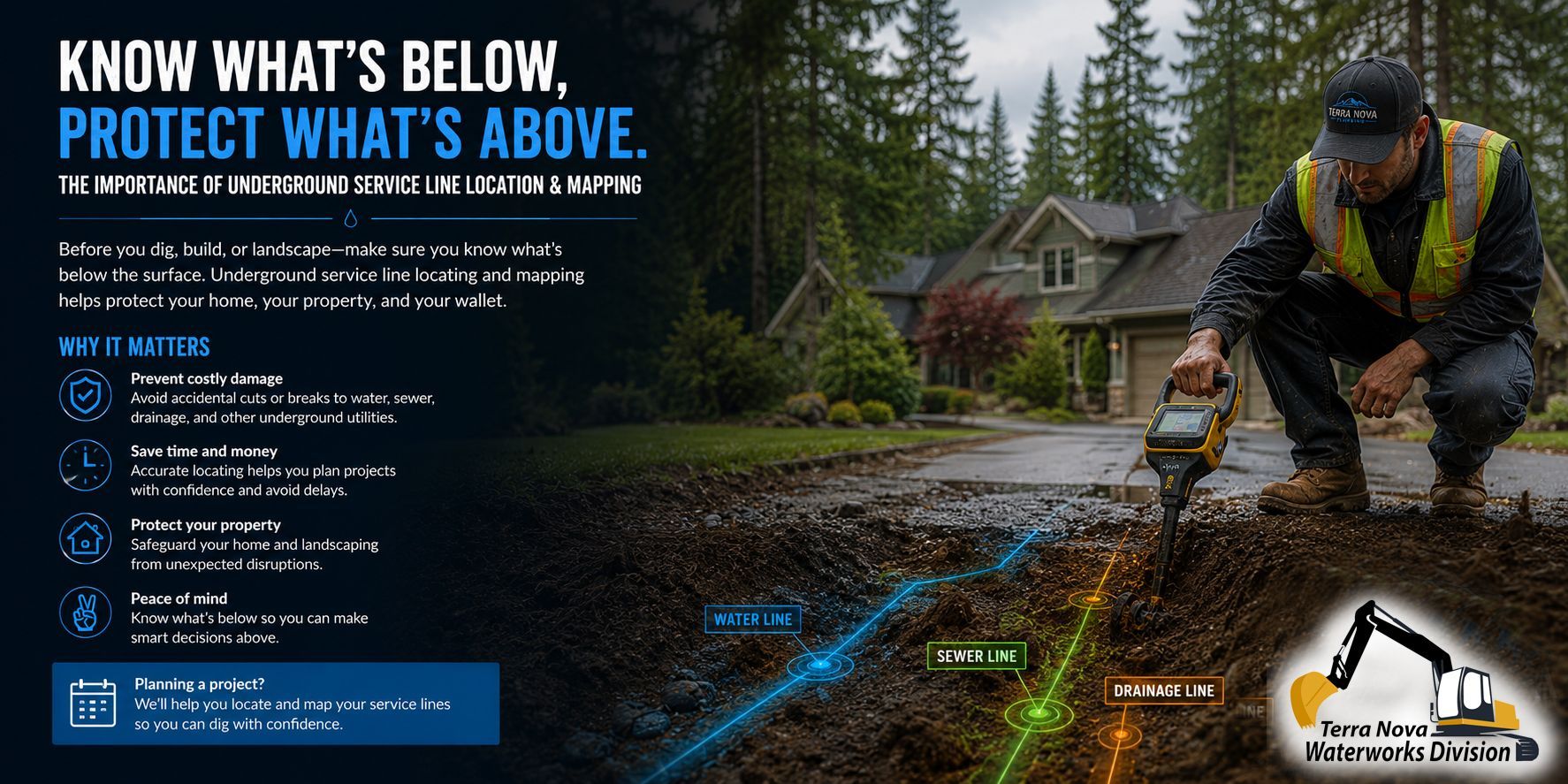
Know What's Below. Protect What's Above.
Why Underground Service Line Location & Mapping Matters
Whether you're installing a new fence, planting trees, replacing a water service, or planning a majorlandscaping project, one thing should always come first—knowing what's beneath the surface.
Most homeowners rarely think about the network of underground pipes that quietly keeps their homefunctioning every day. Water service lines, sanitary sewer lines, perimeter drains, storm drainage systems,irrigation piping, and other underground utilities all work together out of sight. Accidentally damaging oneof these systems can quickly turn a simple project into an expensive repair.
That's why underground service line location and mapping has become one of the smartest investments ahomeowner can make before digging.
More Than Just "Call Before You Dig"
Many people are familiar with utility locating services that identify public infrastructure such as natural gas,hydro, or telecommunications. While these services are essential, they often don't identify privately ownedservice lines on your property.
Private water services, sanitary sewer connections, perimeter drainage systems, irrigation lines, and otherunderground plumbing are the homeowner's responsibility—and they're often undocumented.
Professional underground service line mapping helps locate these systems accurately so you know exactlywhere they are before any excavation begins.
Why Accurate Mapping Matters
* Avoid Costly Repairs.
* Damaging an underground water or sewer line can result in emergency repairs, property damage, and unexpected expenses. Locating these lines beforehand significantly reduces the risk.
* Protect Your Landscaping
Beautiful landscaping takes years to establish. Knowing where underground services are located allows you to install retaining walls, patios, gardens, and trees without disturbing critical infrastructure.
* Save Time on Future Projects
Once your underground services have been mapped, future renovations become much easier. Whetheryou're adding a workshop, extending your driveway, or replacing a fence, you'll already know what's below.
* Make Water Service Replacements Easier
If your home eventually requires a new domestic water service line or sanitary sewer replacement, havingexisting utilities mapped helps projects move faster while minimizing unnecessary excavation.
How Underground Service Line Location Works
Using specialized electronic locating equipment, Terra Nova Plumbing's Waterworks Division can trace underground plumbing systems with remarkable accuracy. Our technicians identify the path of your underground service lines and create a clear map showing their location. This information helps homeowners, contractors, landscapers, and builders confidently plan projects while reducing the risk of damaging underground infrastructure.
Ideal Times to Have Your Property Mapped
Service line location and mapping is recommended before:
* Installing fences or retaining walls
* Building patios or outdoor living spaces
* Planting trees or large shrubs
* Excavating for drainage improvements
* Replacing water service lines
* Repairing sanitary sewer lines
* Installing irrigation systems
* Planning major landscape renovations
* Buying an older home with unknown underground utilities
Peace of Mind Starts Below Ground
Living on Vancouver Island means our homes are constantly exposed to heavy rainfall, shifting soils, mature trees, and changing landscapes. Understanding what's beneath your property gives you confidence to protect everything above it.
Whether you're planning improvements today or preparing for future projects, underground service linelocation and mapping is a practical investment that can prevent expensive surprises.
Let Terra Nova Plumbing Help You Plan With Confidence
At Terra Nova Plumbing's Waterworks Division, we specialize in underground utility locating, service linemapping, water service replacements, sanitary sewer repairs, perimeter drainage systems, and excavationservices throughout the Comox Valley.
If you're planning to dig, build, or renovate, contact our team first. We'll help you know what's below—soyou can confidently protect what's above.